


Of course, changes in a traveler's flight, a late arrival of their vehicle or other unexpected events can lead to a series of hectic decisions after all their planning. In such cases, we all tend to act 'on the spot' without sufficient consideration to the implications of our hasty decisions. To assist us in protecting the safety and quality of our program and also to ensure we are operating legally within this 'changed' set of circumstances, we need to communicate with the guide as early as possible and prepare a written summary of the changes and then verify the relevant details.
Start with the earliest point of failure
Missed connections have a tendency to affect more than just your arrival time. Depending on the circumstances of your changed travel plans, the time of your vehicle pick-up, your check-in time with your guide and other support staff, the transfer of your gear, and the amount of time you have to rest and get ready before heading out into the field could all be affected.
A simple worksheet can help ensure all critical items are addressed. Simply list the following items and mark each as Confirmed, Under Investigation or Doesn't Work: Original Arrival Time, Revised Arrival Time, Ground Transport, Lodge, Trip Date and Time of Hunt Start. Don't wait until you arrive at camp and discover the trip has unraveled while you were concentrating on the flight.
Remember, a little flexibility in your trip planning is fine. However, many guided hunting trips have a guide, and other commitments associated with them. Late arrival can be a problem if the guide has other things going on, or if there are specific ways to gain access to an area after dark.
Tell the guide what changed, not just that it changed
Ensure that communication with the hunting guide is specific and includes all of the relevant information. This would include the original itinerary, the change(s) to travel and other activities, and the alternatives being considered to deal with the change(s). Also, include the most up to date information on any flights and vehicle transfers, the number of people affected and any problems with missed connections or delayed baggage.
To communicate, detail your new schedule, and highlight to the guide what you are now considering to manage your newly disrupted itinerary. For example, ask: Can I move the pickup time? Does the later arrival time work? Must I take separate transport? Is an earlier start time feasible? And would an alternative schedule allow for a safe and more enjoyable hunt?
Use the same method of communication as before. Record all changes. If necessary, make a very short phone call and then send a very short note to remind of the conversation. Don't send a number of partial updates to guides trying to sort out the developing situation. They are likely to get the updates in conflict with each other and that can create a second major problem.
Shortening, postponing or re-routing part of a trip does not necessarily have to be a disaster and could be recommended by your guide due to a variety of reasons including; bad weather, overcast skies, access problems, late starts, early finishes, tiredness, lack of legal shooting hours or even poor field decision making.
Recheck documents, permissions, and timing
Many different items have different date-sensitive information associated with them, e.g. ID, licenses, tags, permits, etc. Be sure to check all of these items for the correct dates, ideally against the current official guidance of the relevant authority, not against an old email, a remembered rule or a communication from another trip that contained similar information.
These are all "date sensitive" and so must be checked against the correct date. For example, the date on your hunting license, fishing license, and special use permit, gear reservations, required field education and reporting, etc. and verify that all are up to date with any changes in required information such as name, address, etc.
Carry copies of digital documents, i.e., printed hard copies of documents that you can access without having a signal. Some documents required by the applicable authority (e.g. fish & wildlife agency) need to be originals (e.g., printed copies of ID, permits, etc.). Ask the guide which documents you need to bring and whom you should contact with questions (e.g. licensing office, land manager, etc.).
Even if the revised itinerary only involves traveling within a country, check for updated requirements for items such as traveling with hunting equipment over borders and special requirements for transporting of items such as bows and guns. General travel advice is not suitable for specific countries and destinations.
Inspect the gear that changed plans can expose
In the worst-case scenario of rushed travel, problems with the equipment that has been packed are often exposed. A case (or two) will not fit into the new (frequently restrictive) baggage policy, the batteries in your torches may be flat, your rain gear buried at the bottom of a suitcase that was checked in. Your medicines, including prescriptions for personal medical needs, may be packed separately from the main hunting kit.
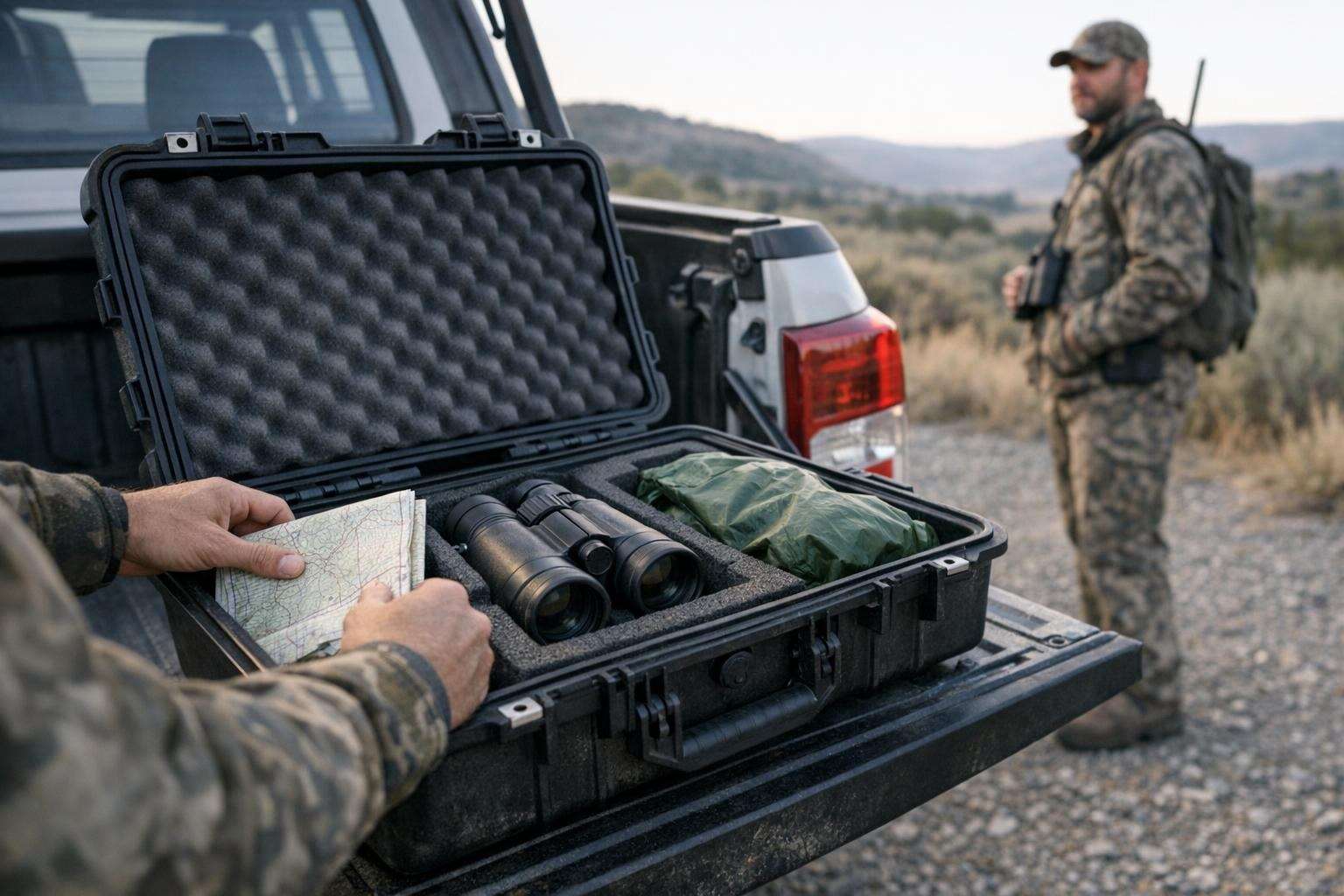
Plan ahead and do a simple check of all the gear needed for the revised hunting plans as if you were departing on that trip. Look for missing clothing, worn out footwear, damaged or leaking packs, broken straps, zippers, missing chlorate fire starters, etc. Check for sufficient battery power for all the critical items like range finders, locator beacons, two-way radios, etc. Check for missing or damaged cases for optics, for damaged transport cases, for missing chargers, etc. Note any regulated or airline prohibited equipment and check the current requirements with relevant authorities.
Do not try to make do with other people's gear at the last minute without having a discussion about it. The guide may know of an alternative but the person using it must have the alternative item in good working order, fit to wear, familiar with its use and able to use it safely. Furthermore, there may be regulations concerning the use of such gear.
Also include in your notification of change any personal health problems that may affect your ability to safely carry out activities of the remaining scheduled time. Remember it could put others in greater danger if you don't reveal problems. Get a proper doctor's assessment if necessary.
Protect the ethical decision when the schedule tightens
Work hard to control the work that you do to ensure you have time to do it all well. Go slow to make good decisions such as to identify species correctly or to take a safe shot opportunity. Help the guide to decide what you can do in the time that you have. Look for stop signals that indicate work is being compromised and stop the activity entirely.
Also while in the field ask the guide how he will be handling shortening your hunt due to the limited amount of time, worsening weather, or poor hunting conditions. Also ask how he will be handling a late arrival and who will make the final decision to shorten or end your hunt. Just because you have paid for a hunt does not mean you have to take an uncertain shot opportunity.
Ethical field decisions include what you do after you've harvested an animal. Work out a practical plan for the retrieval, tagging and transport of the animal and report it in accordance with the current local requirements. If your original schedule does not allow sufficient time for good quality field decisions then tell the client before you head off. Conservation is not separate from field work, it's part of your field work.
Instead of rushing to fit in more in your hunting trip, double check your next move with your hunting guide. All documents and necessary equipment for the newly rearranged schedule of activities must be in order. If necessary, adjust your hunt to ensure the highest quality of experience possible.