





A guided hunt on unfamiliar ground can turn a small planning mistake into a serious problem. You may have the right license but not know where to meet, which access is allowed or how the guide expects decisions to be made. Good preparation means confirming the rules, asking precise questions, checking your readiness and agreeing on ethical limits before entering the field.
Start with the property, not the packing list
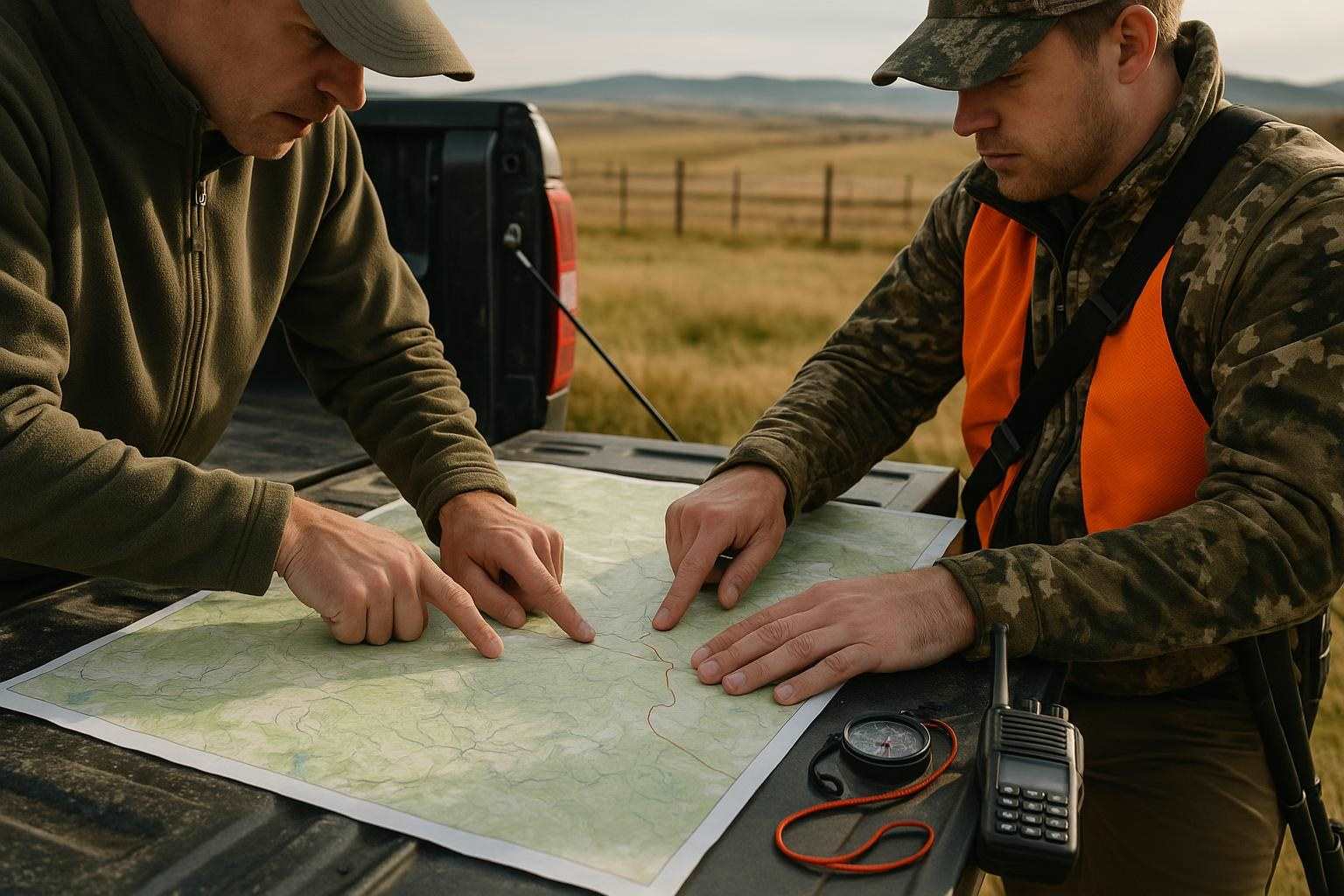
A property may look simple on a map yet have unclear boundaries, locked gates, steep approaches, seasonal closures or neighboring land that is off-limits. Ask the guide for the exact meeting point, arrival instructions, access restrictions and a basic outline of the hunting area. Confirm whether you should arrive with a full tank, bring food and water for the day or travel between separate parcels.
Do not assume a digital map settles access questions. Maps can be outdated, property lines may be hard to identify and permission for one parcel does not extend to another. Treat the guide's directions and posted boundaries as the working limits, and stop when something does not match.
Ask what weather could change the plan, including heavy rain, snow, wind, heat, poor visibility or muddy roads. Extra layers, dry storage and water are minor inconveniences compared with being unable to walk safely, stay warm or protect essential equipment.
Have the useful conversation with your guide
Guide communication is not a formality. Share your experience honestly, including your comfort with long walks, uneven terrain, field dressing, navigation and making a shot under pressure. A guide can plan around a limitation only if you mention it. Exaggerating your ability creates risk for everyone nearby.
Ask questions that produce decisions:
– What species, sex and legal methods are permitted?
– What equipment is expected, and what should remain at home?
– How will we identify the property boundary and safe direction of fire?
– What happens if weather, access or animal movement makes the plan unsuitable?
– Who makes the final call on a questionable shot or possible hit?
Agree on communication signals before leaving the vehicle, especially if terrain or wind may separate you. Discuss what to do if you lose sight of one another. If the guide says a shot is inappropriate, accept the decision in the moment. A missed opportunity is recoverable; a rushed or misunderstood decision may not be.
Check legal details close to departure
Regulations can change after a trip is booked. License requirements, tags, season dates, weapon restrictions, reporting duties, transport rules and land-specific conditions may vary by jurisdiction and species. Verify current requirements through the relevant official wildlife agency or government source, and ask the guide which local rules commonly catch visitors off guard.
Keep required documents in a secure, accessible form, carrying originals when the law requires them. Check that your license matches the hunt. Do not rely on old messages, previous-season paperwork or a friend's understanding of the rules.
The guide may know the property, but legal responsibility does not automatically transfer to the guide. If an instruction seems inconsistent with your license or official guidance, clarify it before entering the field. If uncertainty remains, delay the action and seek authoritative confirmation.
Use a short readiness check
Run through a checklist the day before departure and remove anything that adds weight without solving a real problem.
Practical hunter checklist
– Current license, tags and identification, checked against official requirements
– Weather-appropriate clothing, footwear and rain or cold protection
– Water, food and personal medication for the planned duration
– Communication device, spare power and the guide's meeting details
– Eye and ear protection, when appropriate to the hunt and local practice
– Reliable field knife and basic recovery or field-dressing supplies
– Small first-aid kit, light source and emergency layer
– Pack or storage that protects documents, optics and meat from weather
– Familiar, functioning firearm or archery equipment
– A plan for transporting harvested game legally and promptly
More gear does not guarantee better preparation, and unfamiliar equipment should not be tested for the first time during a demanding hunt. Use equipment you understand, confirm that it functions safely before departure and ask about property-specific restrictions.
Make the ethical decision before the opportunity
Ethical decisions are easier when boundaries are set before an animal appears. Decide what is unacceptable: an uncertain target, poor angle, excessive distance, fading light, unsafe background, unclear species or a shot that could leave an animal unrecovered. A guide can help assess conditions, but avoiding an unjustified shot remains your responsibility.
A legal opportunity is not automatically an ethical one. If identification is uncertain, the animal is moving toward a boundary or another hunter, or you are too tired, cold or rushed to decide safely, wait or say so. The cost may be a lost chance, but conservation ethics requires more than meeting a regulation's minimum.
Recovery is part of the decision. Follow the guide's process for marking the last known location, waiting when appropriate and checking evidence carefully. Do not enter difficult terrain alone or turn tracking into a safety problem. If the animal cannot be recovered, report the situation honestly and follow applicable rules.
Leave the property in better condition
Respect gates and fences, control noise and vehicles, pack out waste, avoid unnecessary disturbance and treat neighboring land as off-limits unless permission is clear. Ask before crossing anything that may mark a boundary, and do not remove natural objects or leave marking materials behind.
Afterward, tell the guide what worked and what caused confusion. Discuss access, communication, safety, recovery and any regulation that was difficult to interpret. That debrief improves future planning for both sides.
Responsible hunting is not a performance of confidence. On unfamiliar property, it means checking what you do not know, speaking up early and declining decisions that fail to meet your legal and ethical standard.